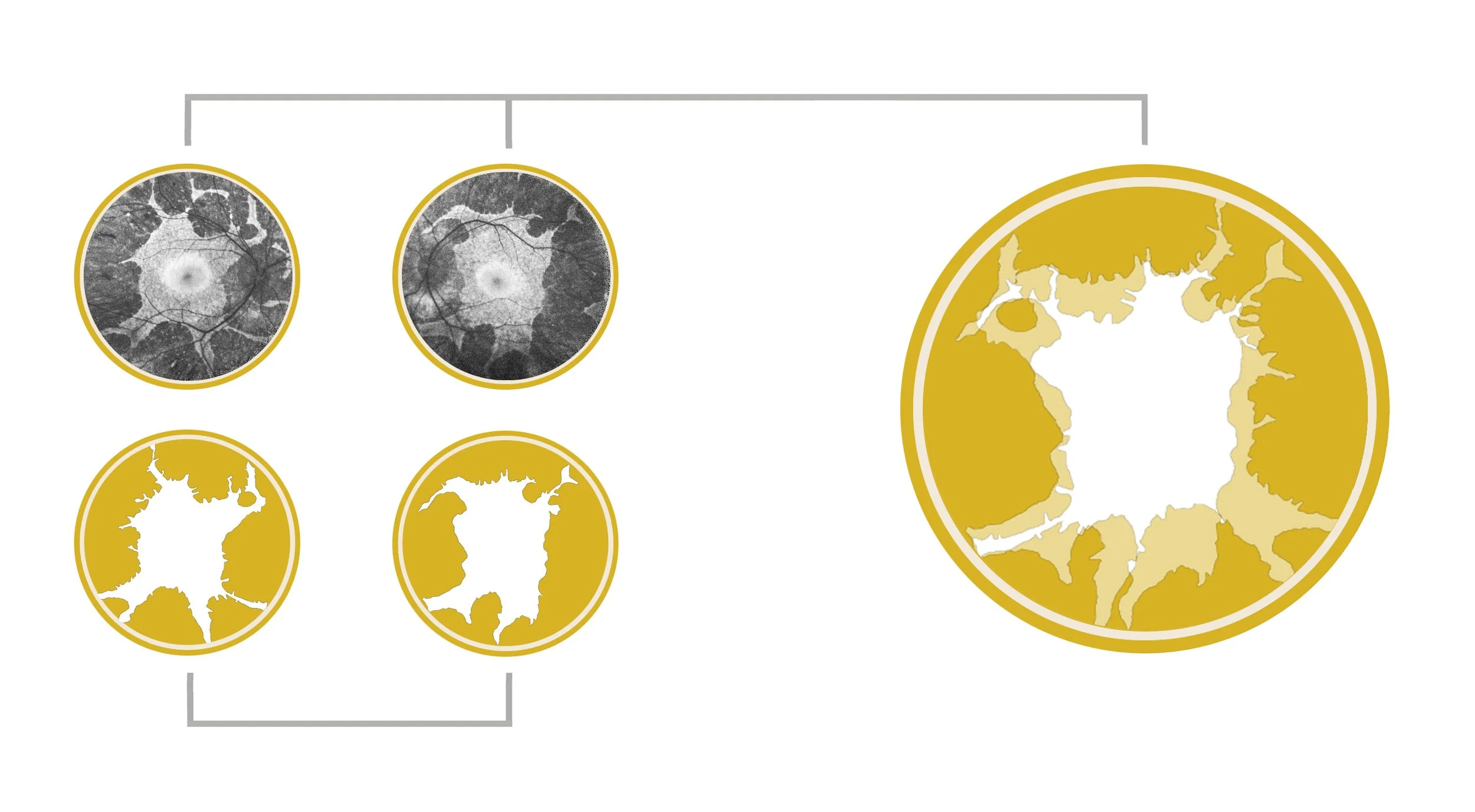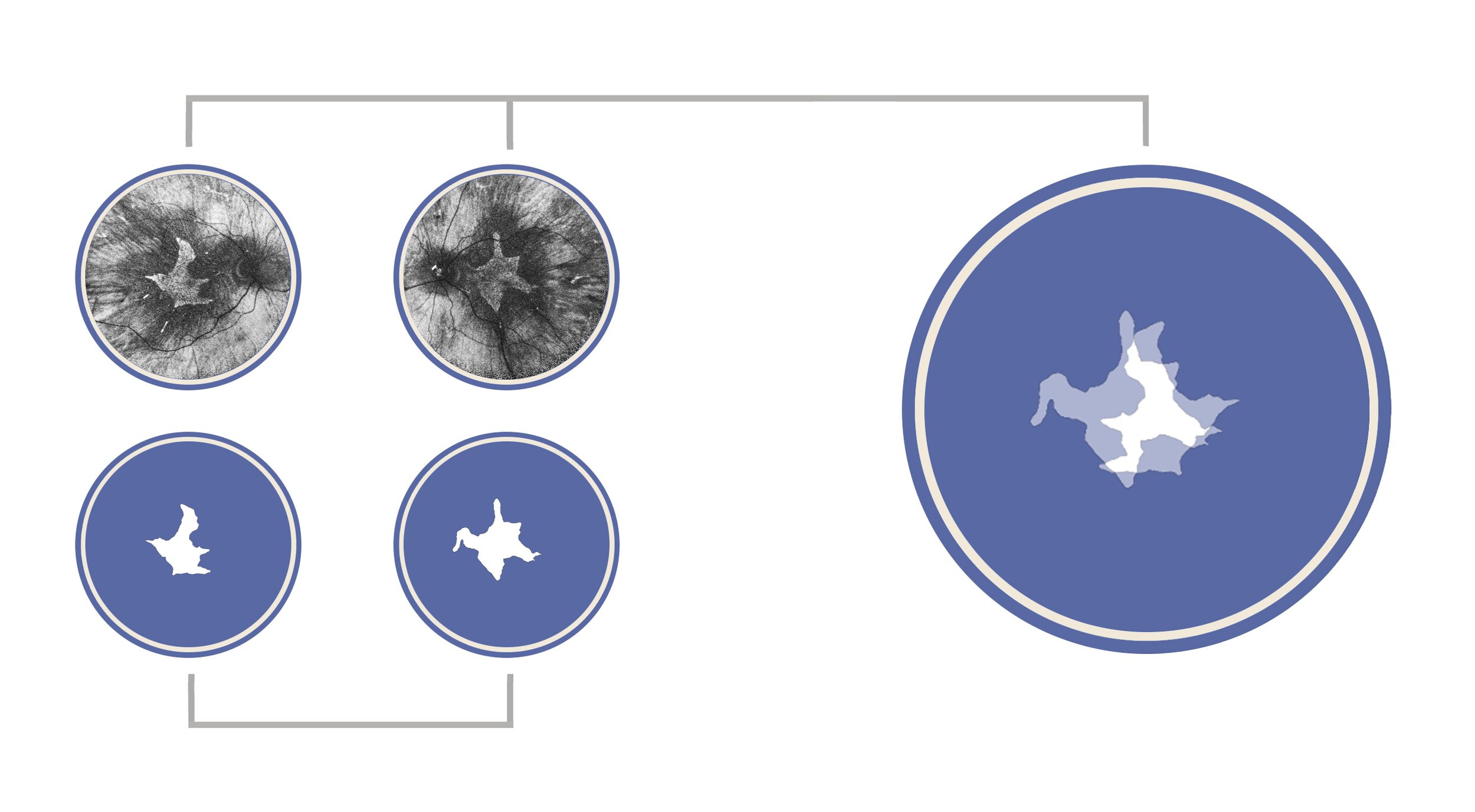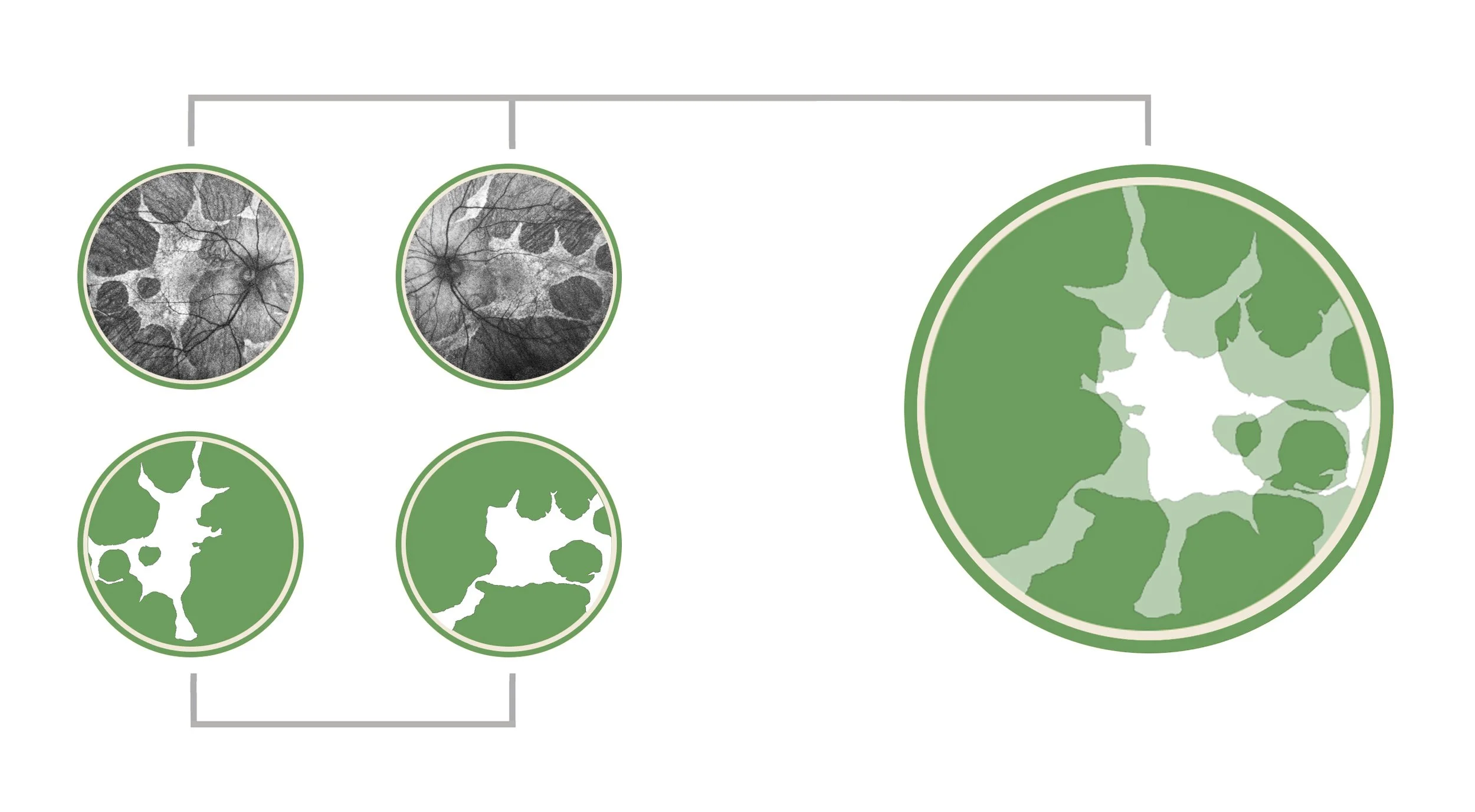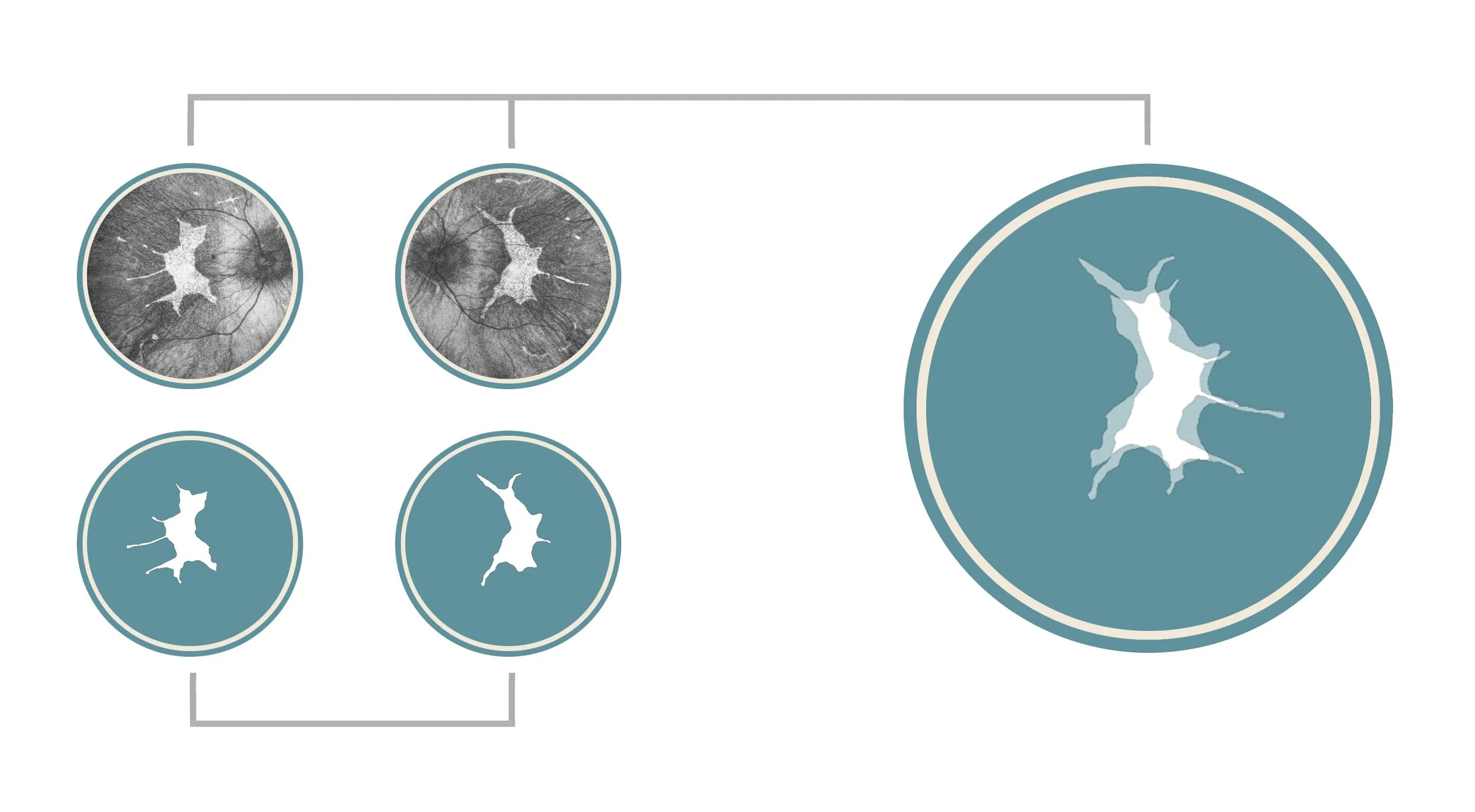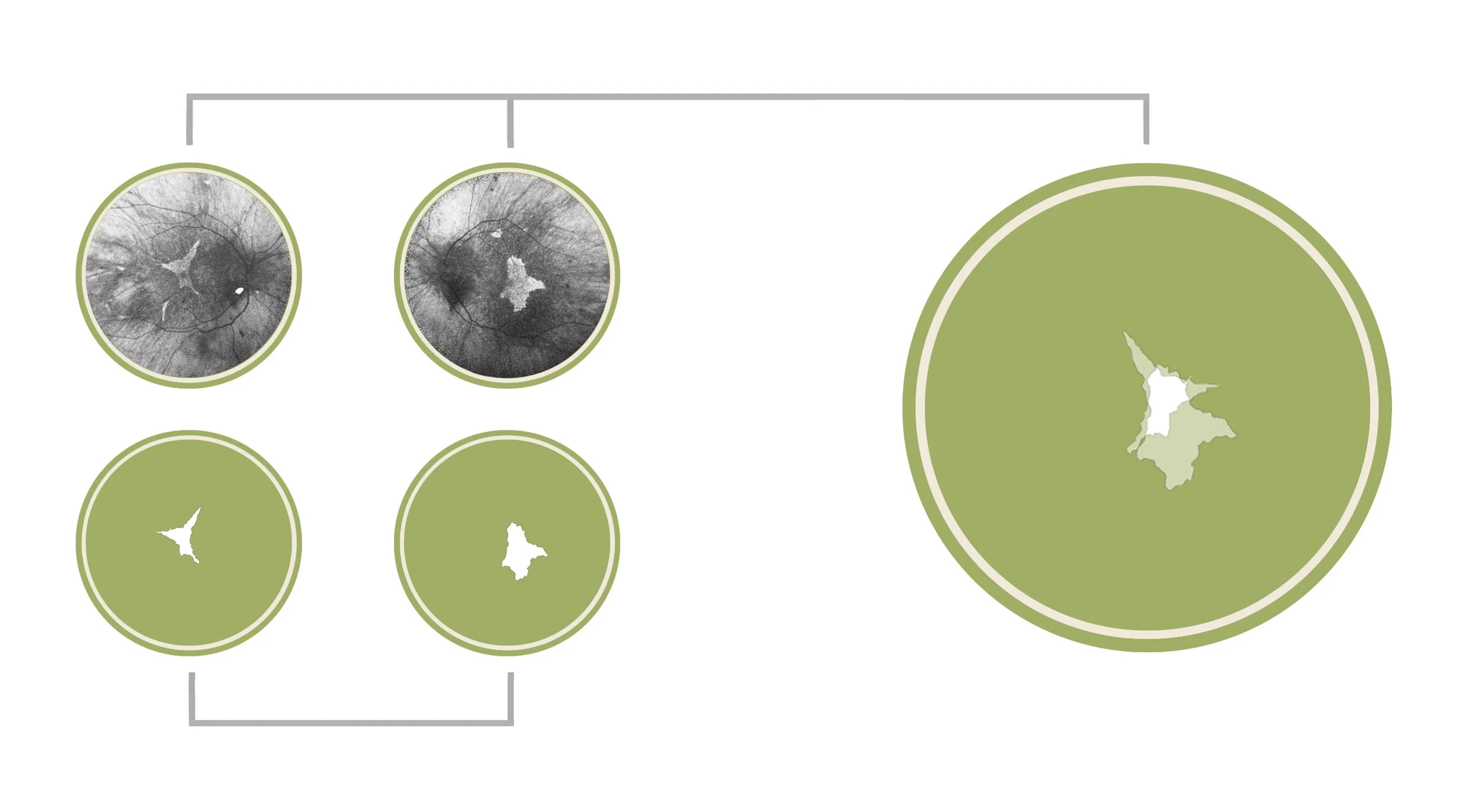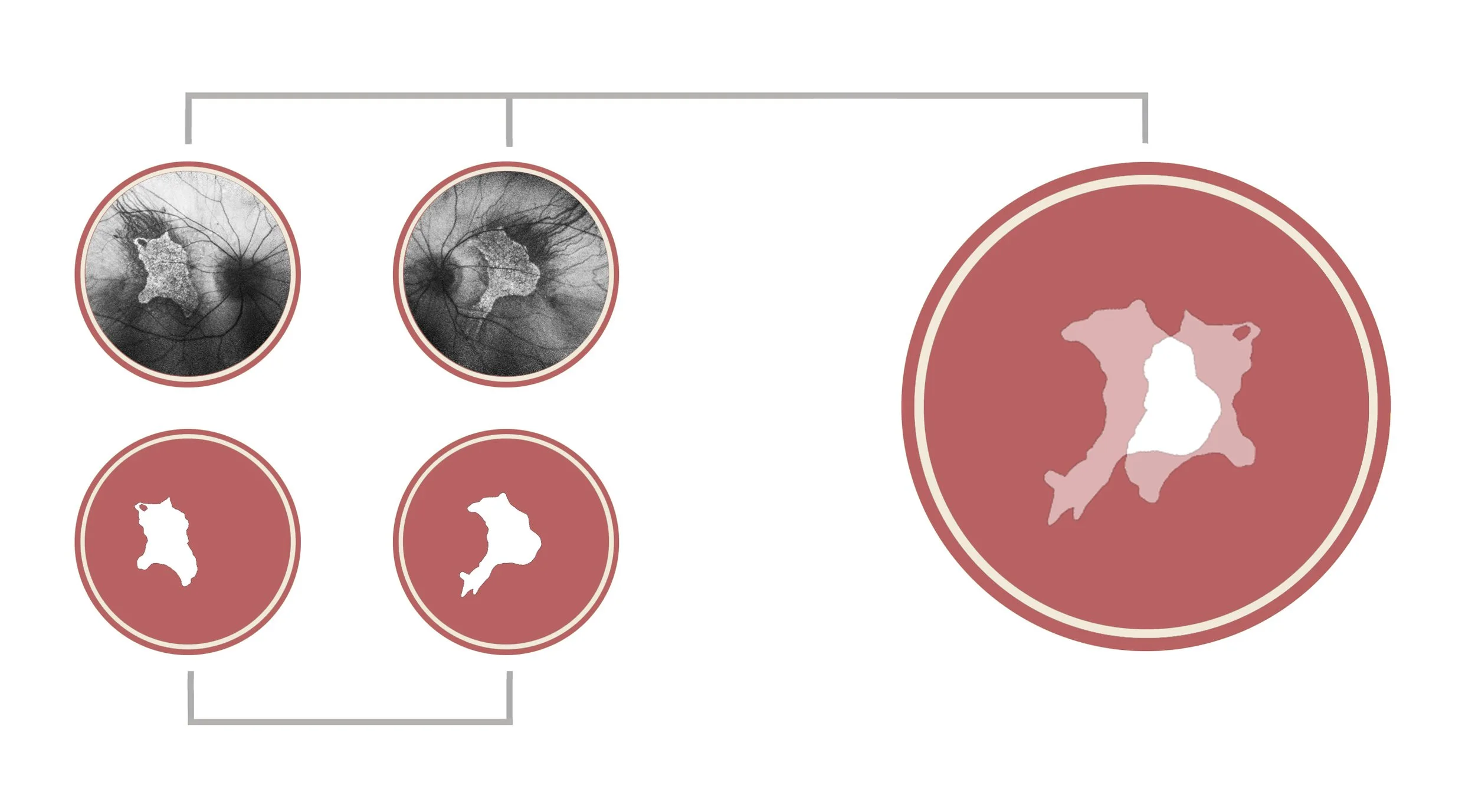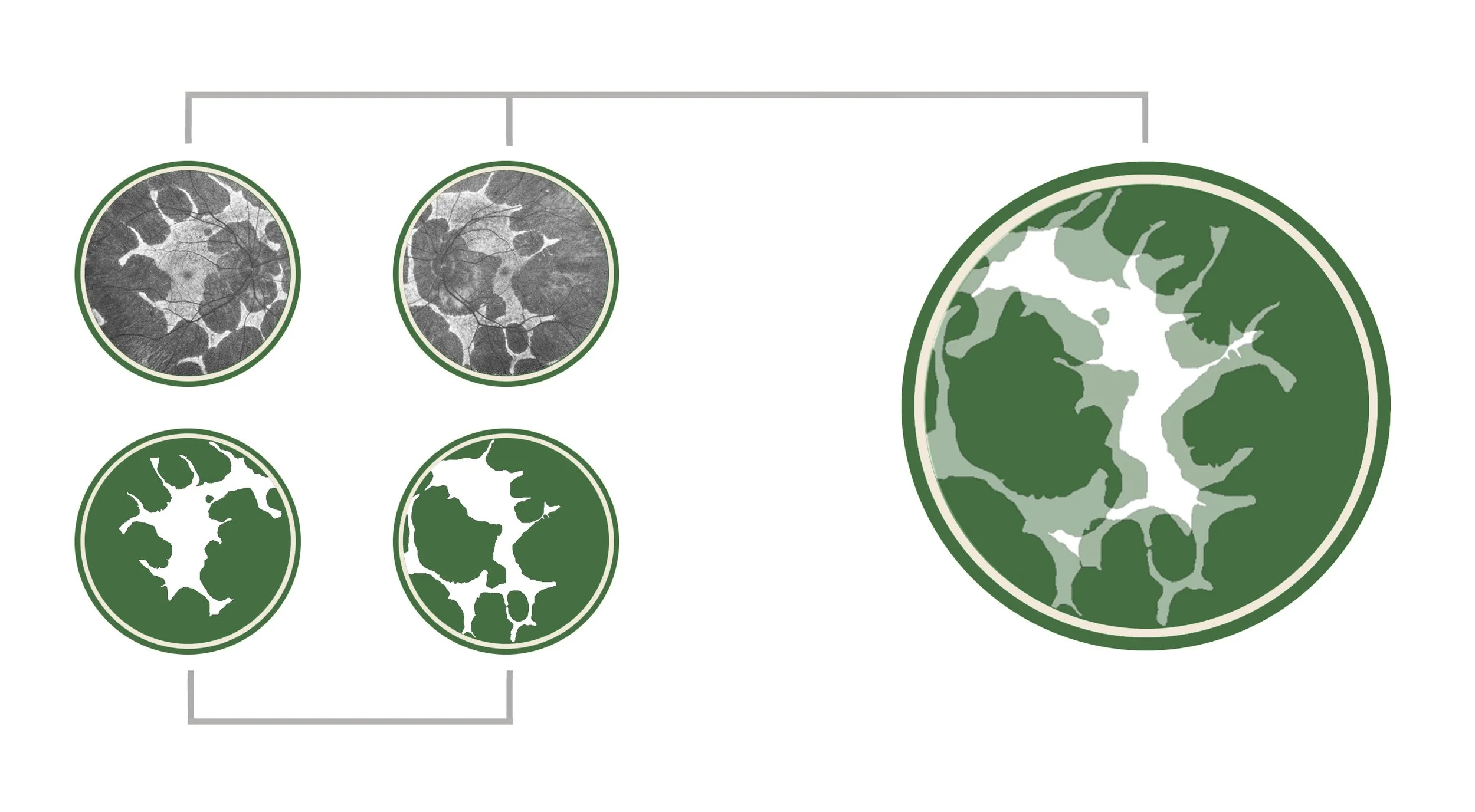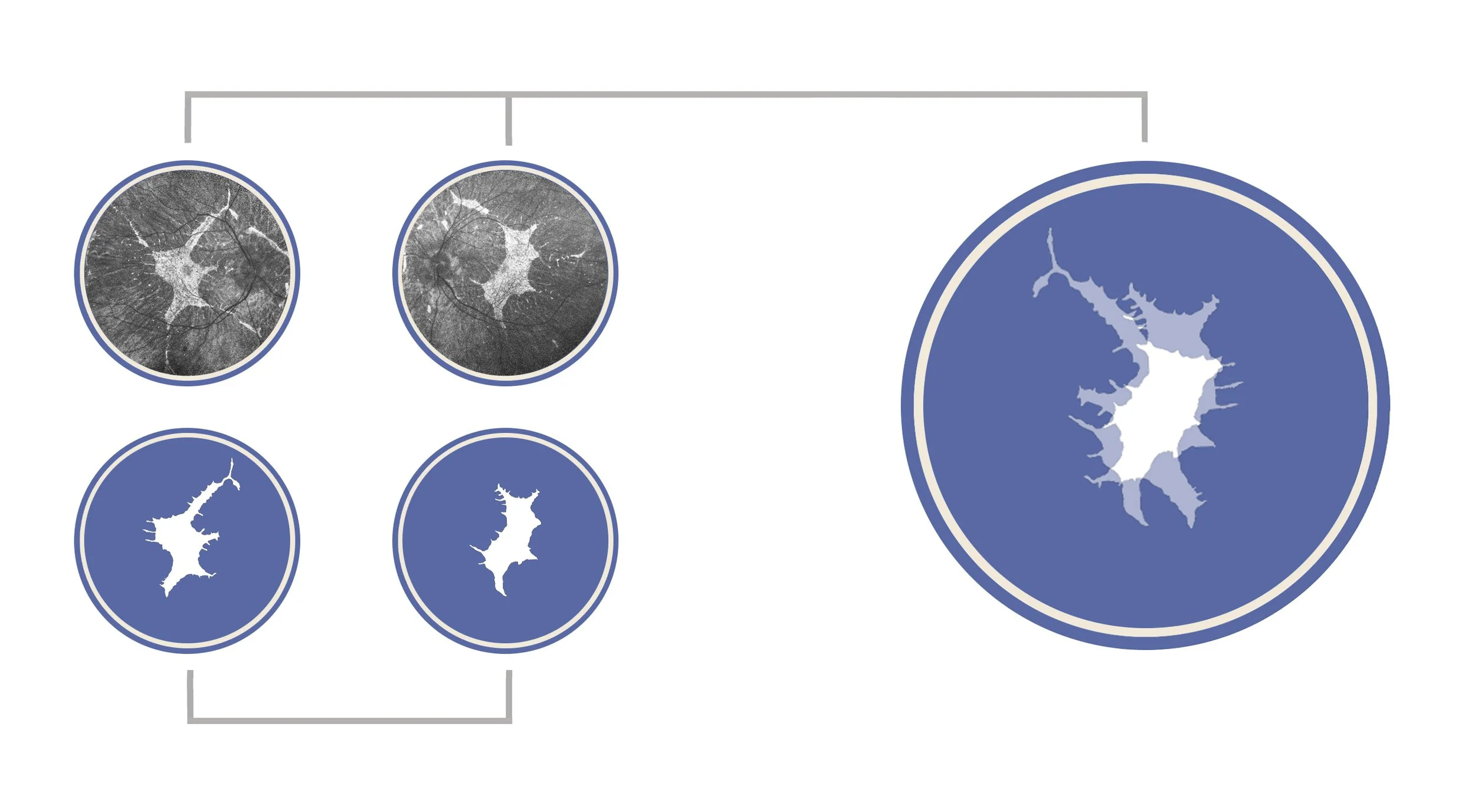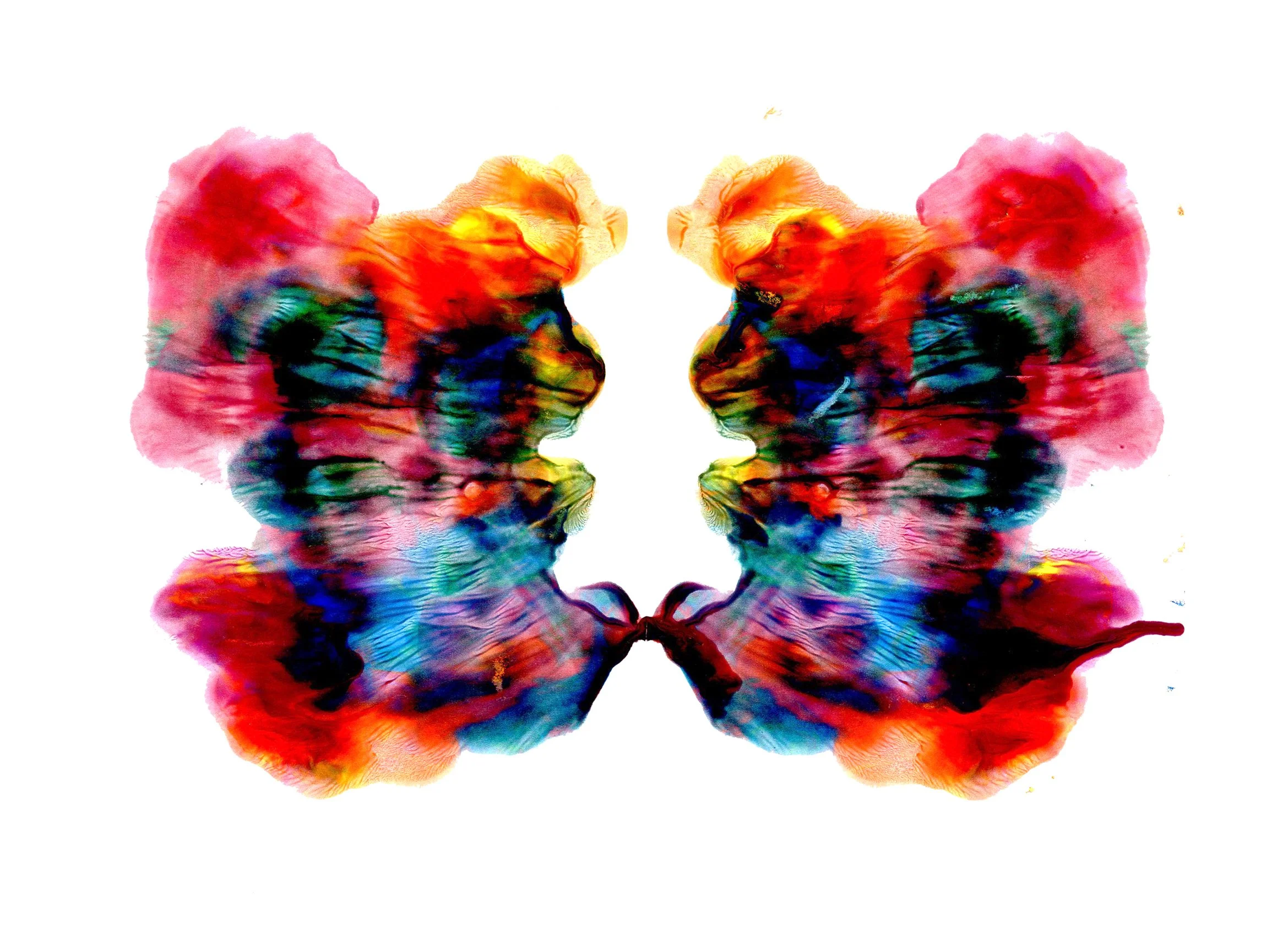
Reflective (or line) symmetry occurs when a line, known as the axis of symmetry, divides a shape or object into two halves that are mirror images of each other. If folded along this line, the two halves match perfectly. It can be horizontal, vertical, or diagonal.
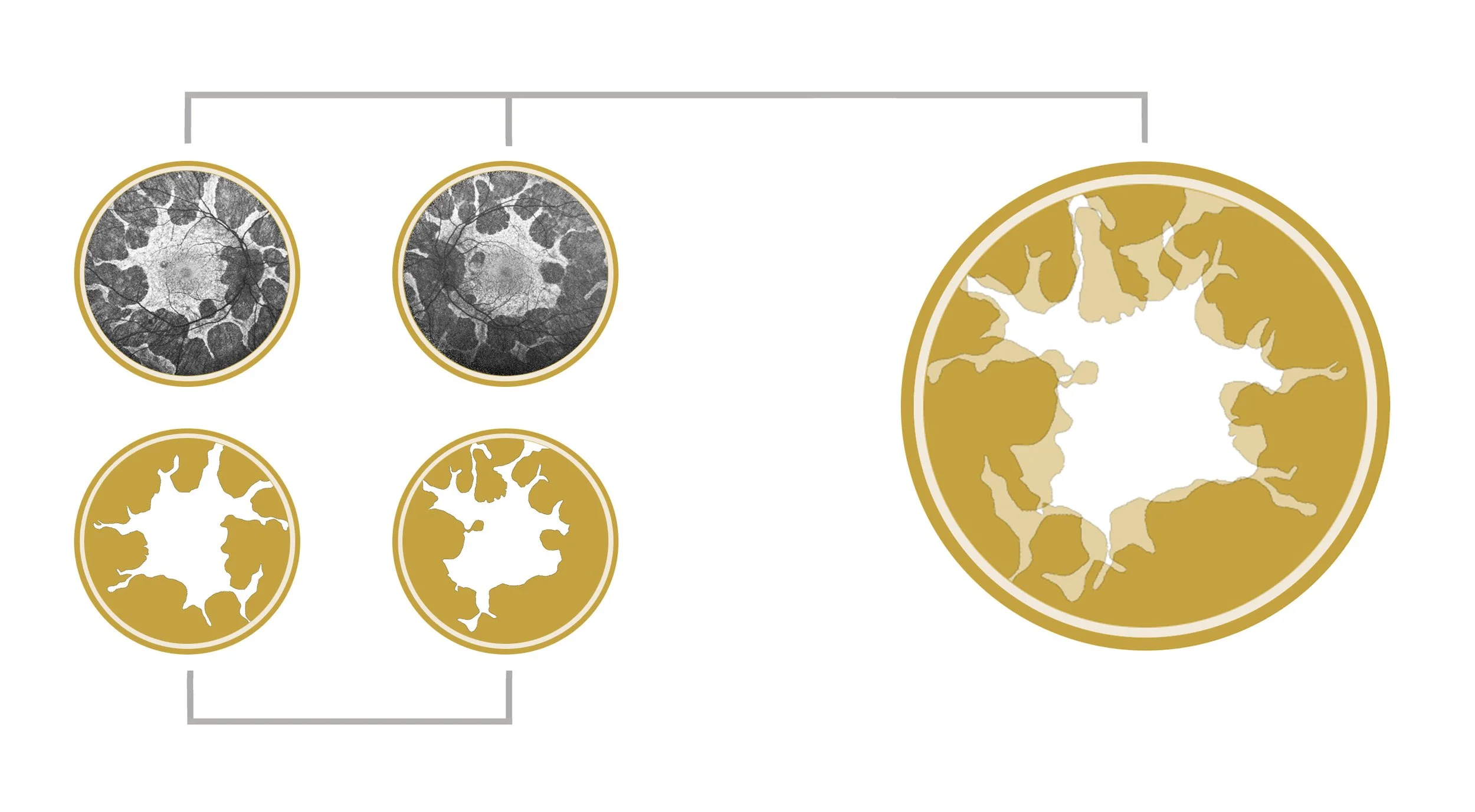
While reviewing a series of Fundus Autofluorescence (FAF) images from a study evaluating retinal degeneration in Choroideremia patients and noticed there was a symmetrical share to the island of remaining health retina.
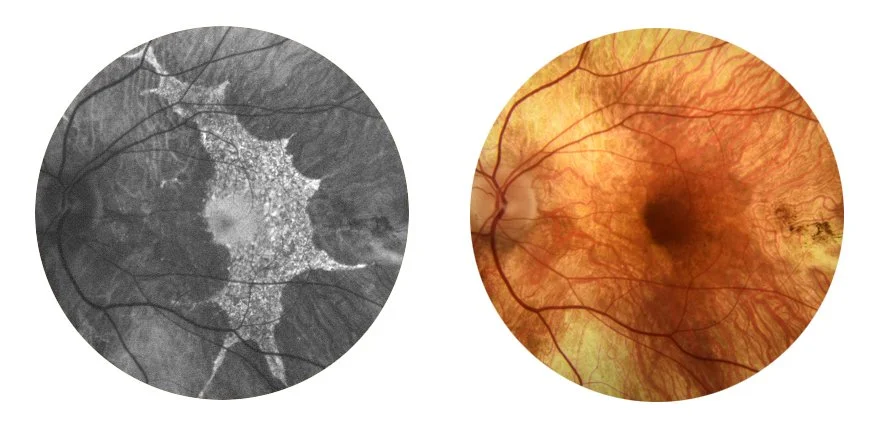
FAF focuses on the fluorescent properties of pigments in the retina to generate images that help us view various disease processes from a different perspective. The images below show how FAF ( left image) can reveal pathology which is difficult to visualise when viewing the retina with an ophthalmoscope or slit lamp (illustrated by the colour fundus image on the right).
One Sunday while crafting with my daughter producing what I can only describe as squishy symmetry painting (there probably is a name for this technique but I like squishy symmetry painting or, SSP). For those who are not aware of the SSP technique it involves folding a large sheet of paper in half then opening it back up and putting blobs of paint on one side. Then you fold over the page so it squishes the paint. Open up the page and there you have a SSP painting.
When back at work on Monday morning, with Sunday SSP’s still fresh in my mind, I started to explore whether using the SSP technique in reverse on the Choroideremia patients would show any kind of mirror-symmetry.
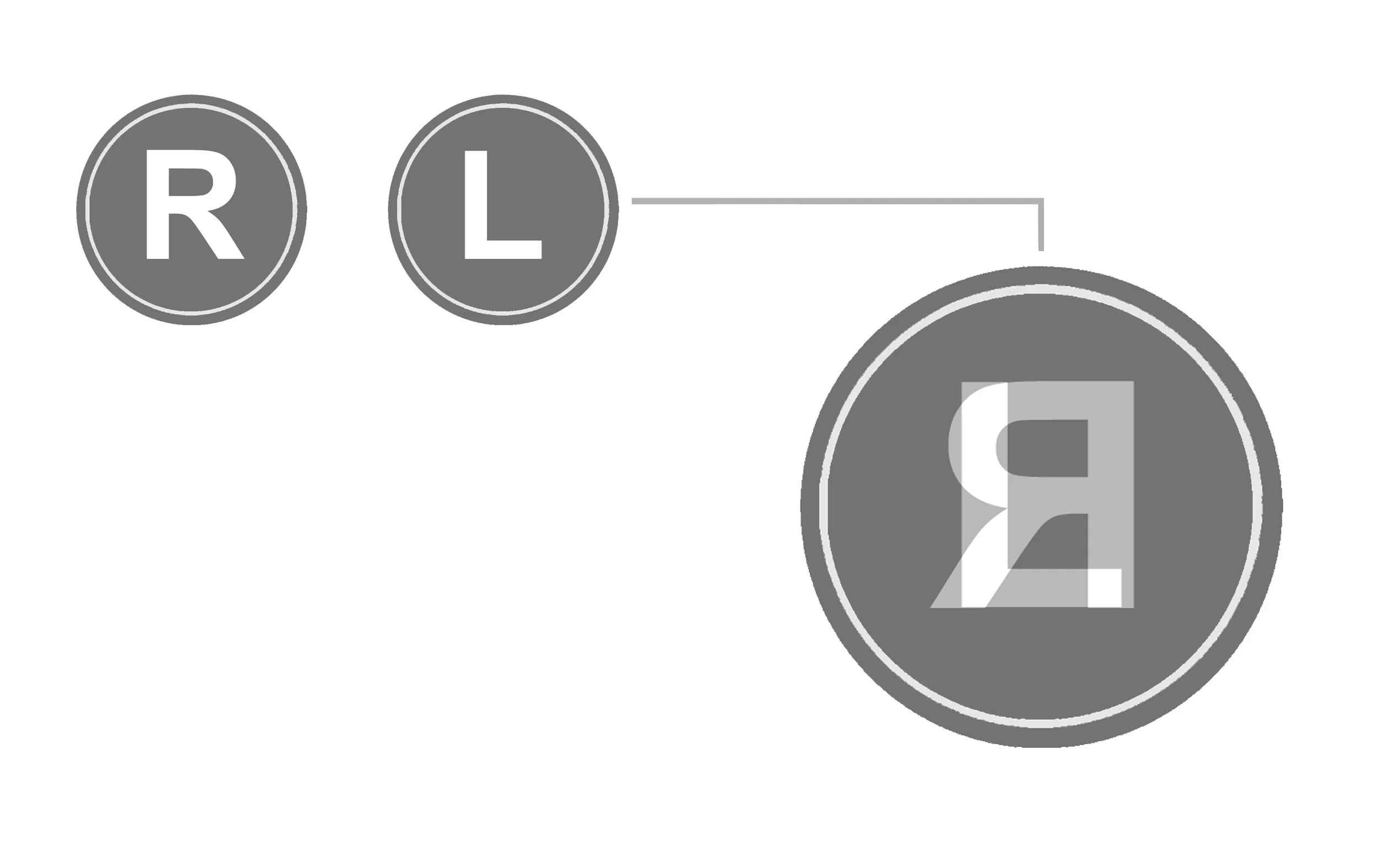
I exported an FAF image from one of the patients and highlighted the islands in Photoshop. I then flipped the left eye over the top of the right eye (like an SSP) and mapped around the edge of the remaining healthy retina to see if there was any similarities in the shapes.
Comparisons of the shapes of the islands between each eyes revealed a remarkable degree of mirror-symmetry. I showed the examples below to one of the clinicians who was working on the trial and the artwork featured on their paper.